
One of the reasons I address scientific studies that come out is because the media does a terrible job reporting on them. They oversimplify the results. Doing that leads to confusion. One study comes out that says coffee is detrimental for people with certain conditions. The media says, “COFFEE IS BAD!!!”. Then another study comes out noting some of the positive effects of coffee within certain parameters. The media says, “NOW COFFEE IS GOOD”. The problem is, many of the media are not versed in reading and understanding studies. They just look at the results and take the oversimplified statements and only report that. Doesn’t matter about context.
The study I want to talk about in this post is from JAMA Nutrition, Obesity, and Exercise titled: Low-Carbohydrate Diet Macronutrient Quality and Weight Change. This article came out late in 2023 and focuses on how low carb diet macronutrients affect the outcome of gaining weight. For those of you not familiar with what macronutrients are, they are protein, carbohydrates and fats. They studied over 123,000 people, which is good. A study that only looks at five people is not strong enough to make a conclusion. All the participant were healthy to make sure there were no things like diabetes or heart disease skewing the results.
Everyone followed a low carb diet with different macros. They defined a low carb diet as 40-60% of the total calories consumed. That doesn’t sound low carb, but it’s a lot lower than most people eat in a day. I eat 196g per day and I am eating low carb. They examine five categories of low carb diets:
- Total low carb diet (TLCD) focusing on lowering the overall carbohydrates, regardless of macronutrients.
- Animal-based low carb diet (ALCD) focusing on animal-based protein and fat.
- Vegetable-based low carb diet (VLCD) focusing on plant-based protein and fat.
- Healthy low carb diet (HLCD) focusing on less refined carbohydrates and more plant-based protein and fat.
- Unhealthy low carb diet (ULCD) focusing on less healthy carbohydrates, more animal protein and unhealthy fat.
They focused on weight maintenance versus weight loss. They excluded those over 65 and those who at extreme amounts of calories. The included subjects were studied over a span of 20 years. This is another thing to look for in a good study, a long study period shows less variation than a shorter period.
What they found was interesting. Click for a larger view of this figure.
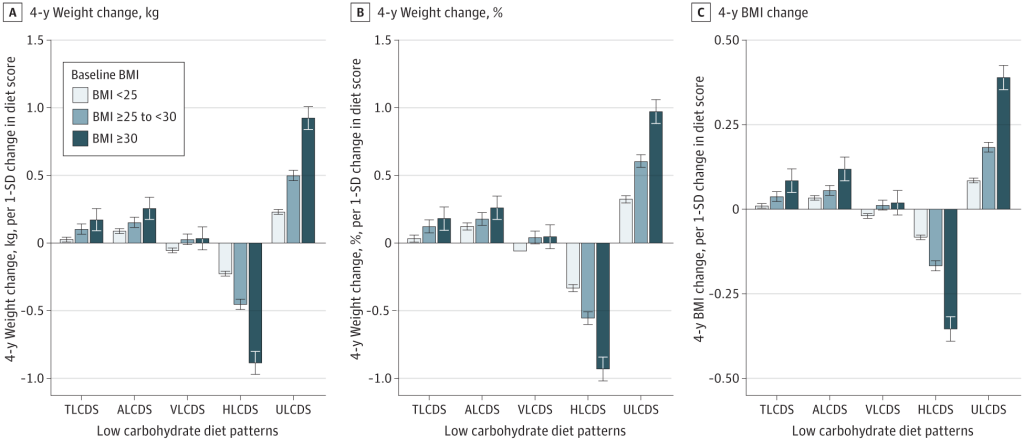
What this graph shows is that the highest weight gain came from the ULCD group. That is your keto diet group. HLCD had the lowest weight gain over time, followed by VLCD, ALCD, and TLCD. According to Liu, Hu, and Rai (2023):
Our findings highlight the importance of considering macronutrient quality in LCDs when assessing their associations with weight change, further endorsing the emphasis on healthier food groups as an effective approach for weight management. Indeed, it is well established that higher fiber content can promote satiety and reduce overall calorie intake.29 Additionally, consuming unsaturated oils from plant sources, such as nuts, seeds, and olive oil, has been associated with better weight outcomes and reduced cardiometabolic risk compared with saturated fats from animal sources.30–32 Conversely, saturated fats have been associated with increased inflammation, insulin resistance, and higher risk of weight gain and obesity.33–36 Furthermore, consuming refined carbohydrates and added sugars can lead to rapid fluctuations in blood glucose levels, which may contribute to increased hunger and calorie intake.37–39
The bottom line: Focus on healthy plant-based sources of macronutrients. This study had limitations due to the study group being mostly white health professionals, which makes it harder to apply this to other populations. They also didn’t measure body composition. However, I do think this study has applicability regardless. It doesn’t mean you have to eat perfectly. I eat a fatty piece of meat on occasion as well as enjoying an unhealthy treat. Focusing on the majority of your diet is key.
What do you think? Let me know in the comments.
 Your Level Best